CGM Wear Time: A Technical Limit or a Business Decision?
Wear time is not a number. It’s a balance.
If we can extend CGM sensor wear time, why don’t we simply make it as long as possible?
At first glance, longer wear time seems like an obvious advantage — fewer replacements, better convenience, and potentially lower cost per day. But in practice, wear time is not a technical maximum, but a constraint shaped by multiple competing factors.
One common assumption is that extending wear time is simply a matter of improving technology. In reality, the challenge is far more complex.
What really limits wear time?
Behind every labeled wear duration is a combination of biological, mechanical, and technical constraints — all interacting over time.
1- Biochemical stability
At the core of CGM sensors is an enzymatic reaction that enables glucose measurement. Over time, this system degrades. Enzyme activity declines, and signal quality becomes less stable.
This does not necessarily mean the sensor stops working — but it does mean that accuracy is not constant over time.
2- Hardware constraints
Even in a miniaturized system, components such as batteries and signal transmission modules have finite lifespans. Maintaining stability over extended periods becomes increasingly challenging, especially under real-world usage conditions.
3- The human factor
Perhaps the most underestimated variable is the body itself.
Adhesives lose strength. Skin conditions vary. Sweat, movement, and daily activities all affect how a sensor performs over time.
In controlled environments, performance can be consistent.
In real life, it rarely is.
Beyond technology: the commercial reality
Even if technology could support longer wear durations, the “optimal” wear time is not defined by capability alone.
1- Cost does not scale linearly
Extending wear time typically requires more robust materials, better stabilization, and tighter quality control — all of which increase cost.
However, market pricing does not always move in parallel. A longer-lasting sensor does not automatically translate into better unit economics.
2- Failure is not linear
One of the less visible realities is that failure rates tend to increase disproportionately in the later stages of wear.
Late-stage issues, such as signal drift, detachment, or inconsistent readings — are more likely to occur after extended use.
This creates a compounding effect:
- More complaints
- More replacements
- Lower user trust
What appears to be an incremental extension in wear time can translate into a disproportionate increase in operational burden.
This is also why extending wear time is not simply a matter of capability, but of managing increasing complexity over time.
3- Real-world experience vs. Theoretical performance
A sensor that performs well over extended periods in testing conditions may not deliver the same consistency across diverse real-world users.
From a commercial perspective, consistency often matters more than maximum duration.
4- Regulatory commitment
Wear time is also a regulatory commitment.
To claim a specific duration, manufacturers must demonstrate that accuracy, safety, and reliability can be maintained throughout the entire period — not just in the early days.
As performance variability increases over time, extending the labeled wear duration becomes increasingly challenging.
In this sense, approved wear time reflects not the maximum possible duration, but the longest duration that can be consistently supported.
While extended wear time is increasingly being explored, achieving it requires demonstrating consistent performance across the entire period — which becomes progressively more challenging as variability increases.
Why 14 days?
It is worth asking why 14 days has become such a common reference point in the industry.
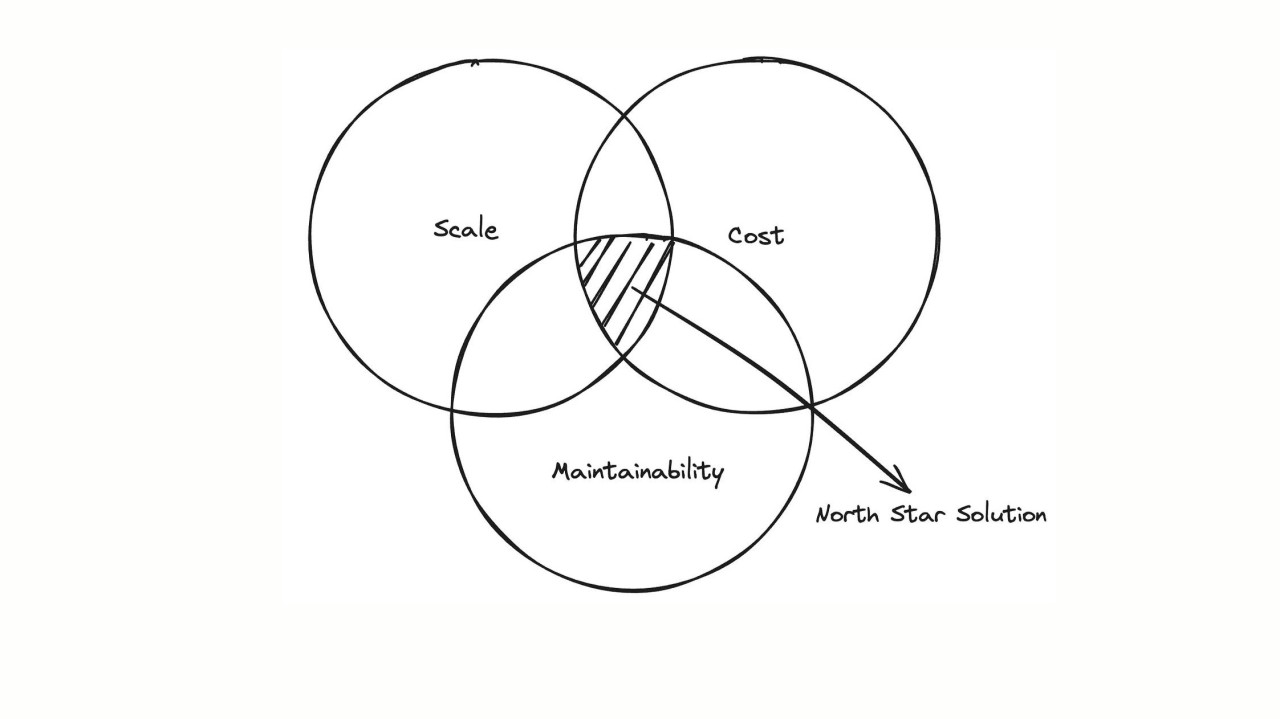
This number is not arbitrary. It reflects a convergence point where multiple constraints — including biochemical stability, hardware performance, human factors, regulatory validation, and commercial practicality — are broadly aligned.
Within this range, sensors can generally maintain acceptable performance, failure rates remain manageable, and validation is still achievable with confidence.
From a commercial perspective, a two-week cycle also fits naturally into usage patterns — roughly translating into two sensors per month — which aligns well with subscription models and recurring consumption.
Sometimes, the most stable design is also the most scalable one.
A different way to think about wear time
Wear time in CGM is often discussed as a number-7 days, 10 days, 14 days.
But in reality, it is not just a specification.
Understanding these factors helps explain why different products make different design choices — and why wear time, in practice, is the result of a complex set of trade-offs rather than a single technical limit.